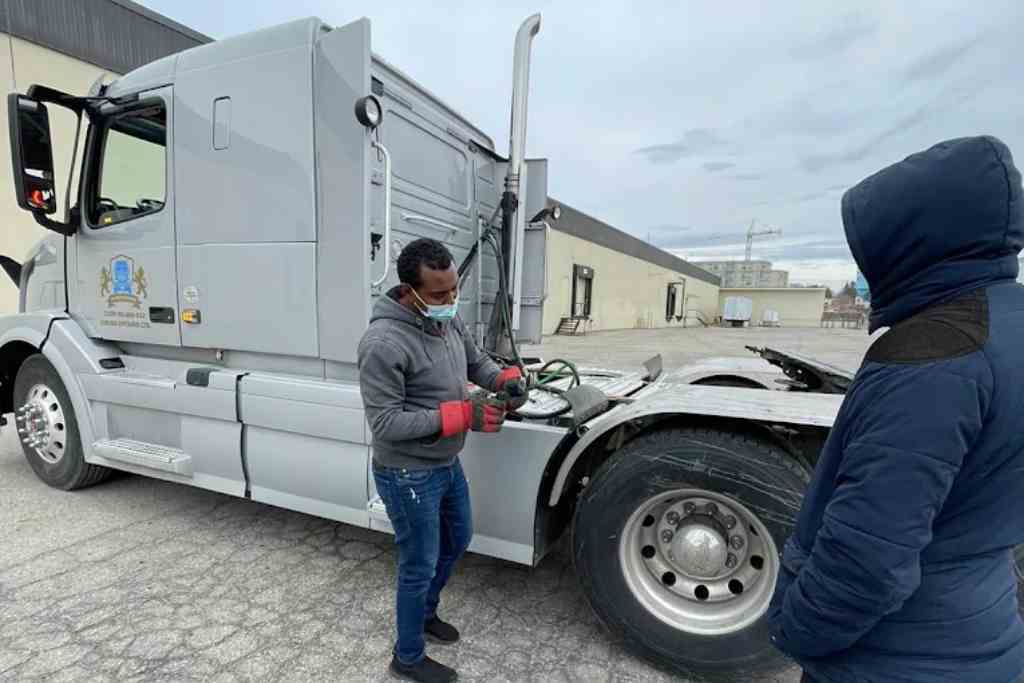
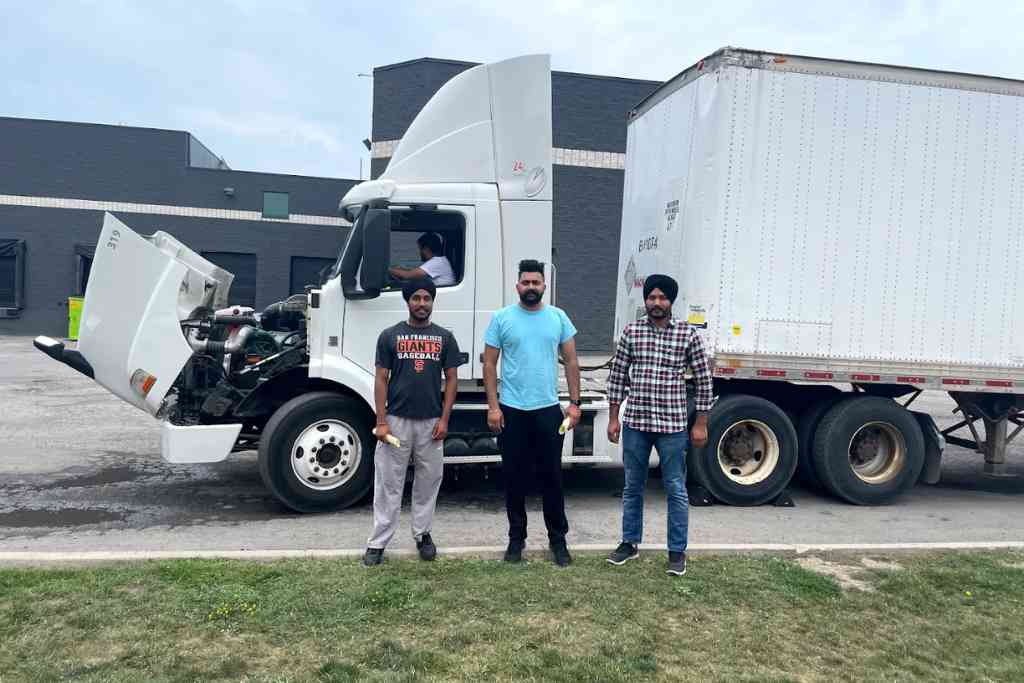
Understanding truck air brake system basics is one of the most important steps before attempting your Z endorsement test. Air brakes are not just another mechanical topic. They are a safety system designed specifically for heavy commercial vehicles.
Unlike regular car brakes, air systems operate using compressed air, multiple tanks, and automatic safety mechanisms. If you are preparing for the air brake endorsement in Brampton, learning these fundamentals clearly will reduce confusion and improve test performance.
In Ontario, commercial vehicles must meet strict brake safety standards. That is why students are required to understand inspection procedures and pressure system behavior before licensing.
Key Takeaways
- Air brakes use compressed air instead of hydraulic fluid.
- The system includes a compressor, tanks, governor, and brake chambers.
- Low air pressure triggers warning systems automatically.
- Daily brake inspections are legally required.
- Inspection sequence matters more than speed.
Tip: “During practice, speak your inspection steps out loud while performing them. This builds memory and prevents missed steps during your air brake test.”
Understanding Commercial Truck Air Brakes and Why They Matter
Commercial truck air brakes are designed for heavy vehicles that carry significant weight. Hydraulic brakes, used in passenger cars, cannot safely manage multi-axle loads the same way.
Air brake safety basics focus on one main principle: compressed air controls braking force. When you press the pedal, air pressure moves through the system and activates brake chambers.
This heavy truck braking system includes built-in protections. If air pressure drops too low, the system automatically applies spring brakes. This safety feature prevents uncontrolled vehicle movement.
Many students think the system is too technical. In reality, the core idea is simple: air builds pressure, pressure activates brakes, and safety systems protect against failure.
Air Brake System Components and Air Brake Pressure System Explained
Understanding air brake system components becomes easier when you group them by function.
Compressor, Governor, and Air Tanks
The compressor produces air.
The governor controls pressure limits.
Air tanks store compressed air.
The air brake pressure system works in a cycle. Air builds up, reaches a set limit, then the governor stops compression. When pressure drops, the cycle restarts.
Brake Chambers and Slack Adjusters
Brake chambers convert air pressure into mechanical force. Slack adjusters ensure proper brake adjustment and contact.
Service Brakes and Spring Brakes
Service brakes slow the vehicle during normal driving.
Spring brakes act as parking and emergency brakes.
Governor cut-in and cut-out pressure is an important concept. It refers to the pressure range where the compressor starts and stops building air.
Breaking the system into sections makes it easier to remember during testing.
Truck Air Brake Operation During Driving
Truck air brake operation during driving requires constant awareness of pressure gauges.
When the engine runs, air builds in the tanks. As you apply the brake pedal, air moves into the brake chambers. Releasing the pedal releases air and disengages braking force.
If air pressure drops too low, warning alarms activate. The air brake warning system alerts the driver before braking performance becomes unsafe.
If pressure continues to fall, spring brakes automatically engage. This prevents brake system failure from becoming dangerous.
Monitoring air system build-up time and checking brake pedal response are part of safe operation.
Air Brake Inspection Basics and Pre-Trip Testing Procedure
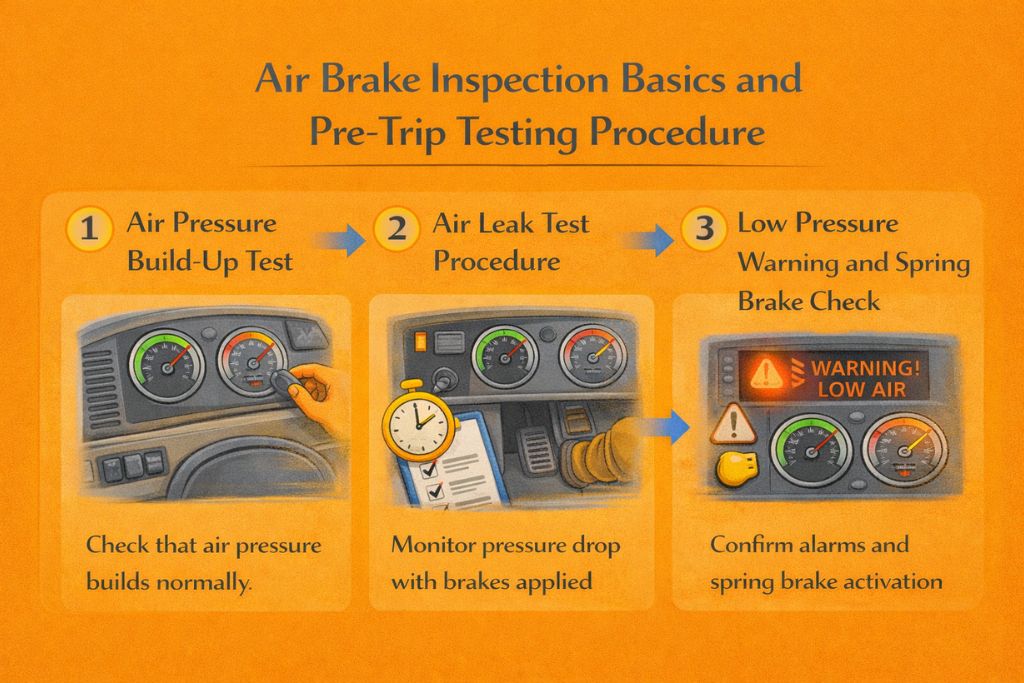
Air brake inspection basics are essential for passing the Z endorsement test.
Daily inspection is required before operating commercial vehicles. This is not optional. It is a safety compliance rule.
Air Pressure Build-Up Test
Start the engine and monitor how long it takes to reach normal pressure. Slow build-up can indicate system problems.
Air Leak Test Procedure
With the engine off and brakes applied, monitor pressure drop within an acceptable range. Excessive loss indicates leaks.
Low Pressure Warning and Spring Brake Check
Lower pressure intentionally to confirm that warning alarms activate and spring brakes engage correctly.
Following a logical inspection sequence prevents missed steps. Repetition builds confidence.
Common Mistakes Students Make in Air Brake Testing
Most errors during air brake testing are not due to misunderstanding. They are caused by rushing.
Common mistakes include:
- Skipping inspection steps
- Misreading pressure gauges
- Forgetting to explain actions verbally
- Not waiting long enough during leak tests
Examiner scoring deductions usually relate to incomplete sequences rather than complex mechanical errors.
Understanding air brake safety basics thoroughly reduces anxiety and prevents avoidable mistakes.
How to Study Truck Air Brake System Basics for the Z Endorsement Test?
Studying effectively means focusing on system understanding, not memorizing isolated facts.
Start with:
- Air brake system components
- Pressure build-up and governor function
- Inspection steps
- Warning systems
Reading about truck air brake system basics alongside practicing inspection builds stronger retention.
Z endorsement tests in Ontario follow standardized guidelines. If you understand airflow, pressure ranges, and inspection sequence, the written test becomes manageable.
Using diagrams while reviewing air pressure gauge reading and brake response scenarios improves comprehension.
Air Brake Endorsement Training in Brampton and Next Steps
To attempt the endorsement test, Ontario requires approved training.
If you are preparing in Brampton, Peel Truck Driving School offers structured air brake endorsement training aligned with provincial standards.
After passing the test, the Z endorsement is added to your license. This allows you to legally operate vehicles equipped with commercial truck air brakes.
The licensing update process is straightforward once you meet testing requirements.
Understanding truck air brake system basics ensures you approach both training and testing with clarity and confidence.
Conclusion
Air brakes may seem complex at first, but the system follows a clear and logical process. When you understand airflow, pressure control, inspection steps, and safety warnings, the entire concept becomes manageable.
Learning truck air brake system basics step by step builds confidence before your Z endorsement test. Focus on understanding how components work together, practice inspection sequences carefully, and monitor pressure readings consistently.
With structured preparation and calm repetition, you can approach air brake training ready and confident.
Frequently Asked Questions
How long does the air brake endorsement remain valid in Ontario?
The Z endorsement does not expire separately, but you must maintain your commercial license and medical validity. If your license is suspended or downgraded, your air brake privileges are affected as well.
Can I take the air brake test without prior mechanical knowledge?
Yes. You do not need a mechanical background. The test focuses on system understanding, inspection procedure, and safety awareness rather than complex mechanical repair skills.
What air pressure range is considered normal for most commercial vehicles?
Most commercial vehicles operate between 100–125 PSI once fully built up. During testing, you are evaluated on understanding normal operating range and warning activation thresholds.
Is the air brake written test harder than the practical inspection test?
It depends on the learner. Many students find the practical inspection easier because it follows a structured sequence, while the written test requires understanding pressure concepts and system functions.
What happens if I fail the air brake endorsement test?
You can retake the test after the required waiting period. Reviewing inspection steps and pressure system behavior usually resolves most issues before a second attempt.
Do air brake systems require more maintenance than hydraulic brakes?
They require regular inspection, but they are designed for durability in heavy-duty conditions. Daily checks and proper adjustment help prevent long-term issues.