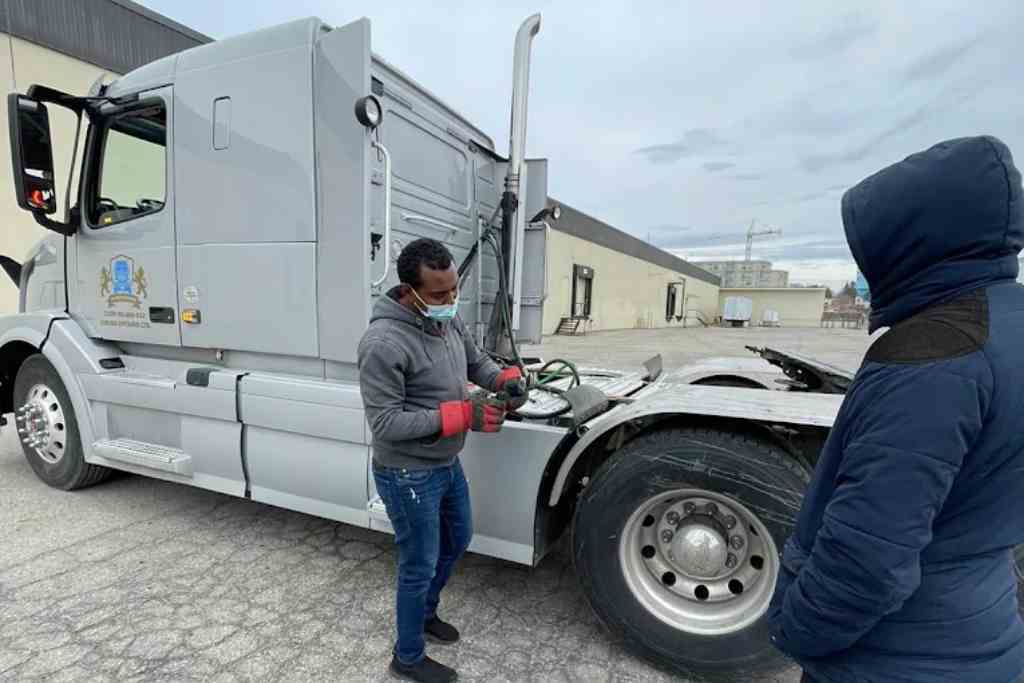
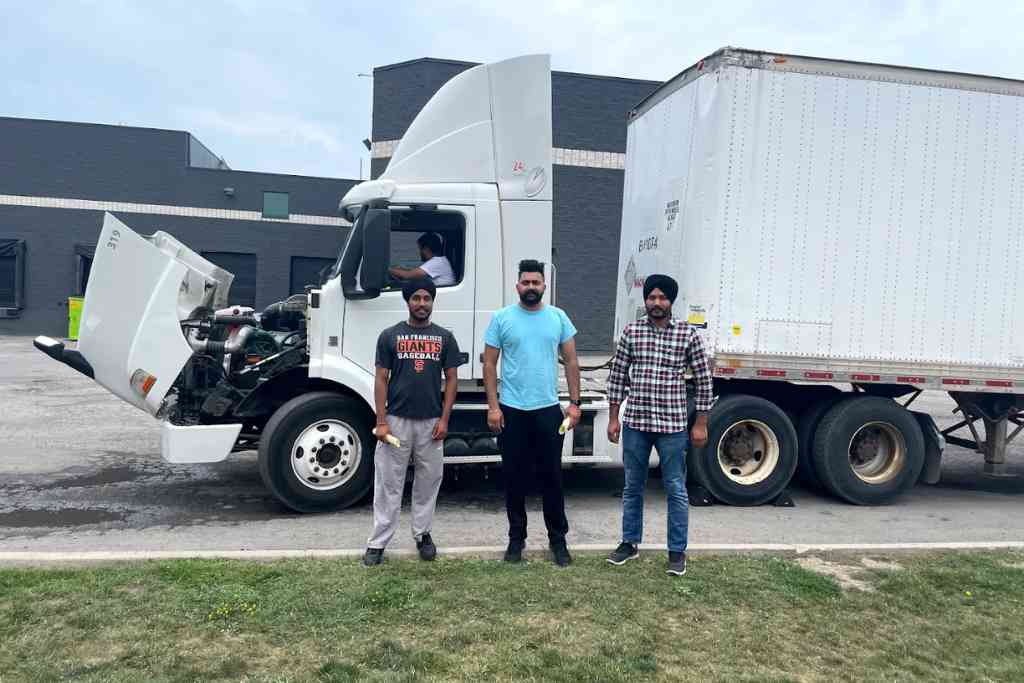
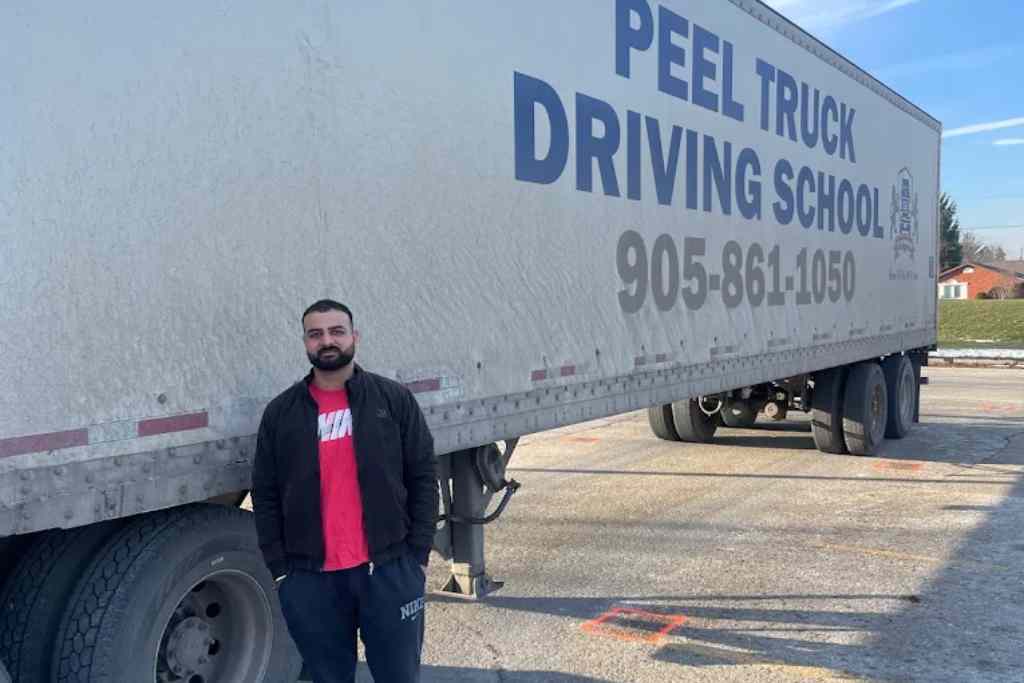
The MELT Program (Mandatory Entry-Level Training) is a structured training course designed to prepare new drivers for a successful career in truck driving. Focused on building safe driving habits, professional skills, and confidence behind the wheel, the program guides students through gradual, hands-on learning. From mastering basic vehicle control to advanced driving techniques in traffic and challenging conditions, MELT ensures drivers develop the knowledge, discipline, and awareness needed for real-world trucking.
Many new drivers face challenges at the start, which is part of the Melt training learning curve. Early progress can feel slow, but this deliberate pace helps students develop safe habits and gain confidence behind the wheel over time.
Key Takeaways
- MELT training follows a structured learning curve, not instant results
- Early difficulty is a normal part of skill development
- Repetition and discipline are intentional training tools
- Confidence builds gradually as habits improve
- MELT prepares drivers for real-world conditions, not just tests
“MELT training is designed to slow learning at the start so drivers build safer habits that last long after training ends.”
Learning Curve in the MELT Program
Many students are surprised by how demanding MELT training feels in the beginning. The learning curve in the MELT program is intentionally gradual, focusing on control, awareness, and consistency rather than speed.
Early progress often feels slow because students are unlearning car-driving habits while adapting to commercial vehicle control. Confidence does not appear immediately because repetition is used to rewire behavior, not reinforce shortcuts. Over time, repeated practice begins to feel natural, and skills become automatic rather than forced.
MELT Training Challenges for Beginners
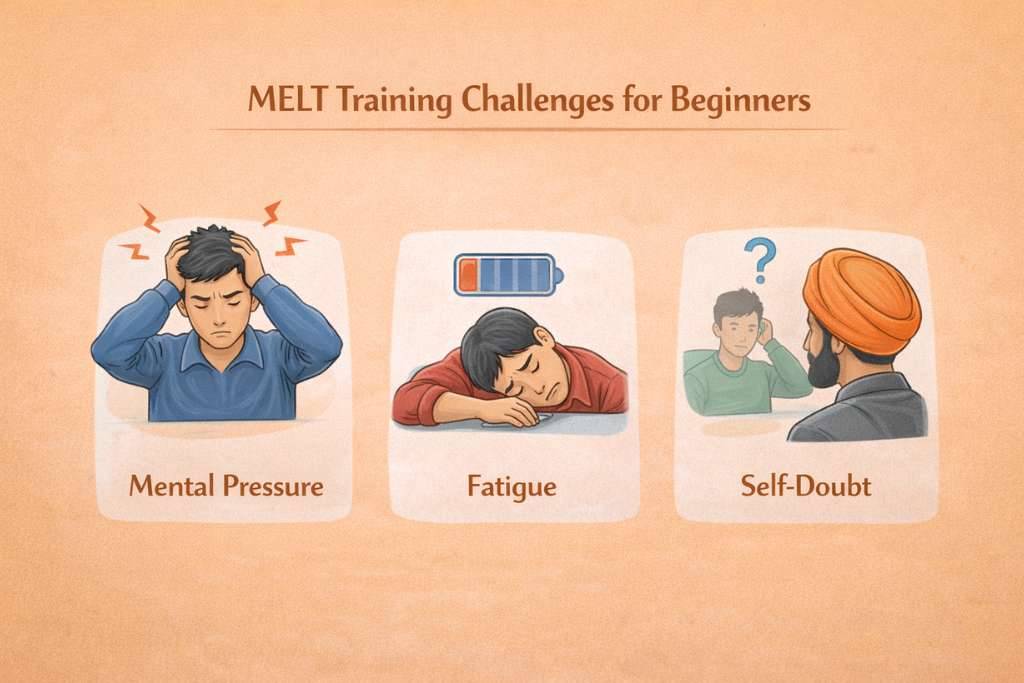
MELT training challenges for beginners usually appear in the early stages. Mental pressure, fatigue, and self-doubt are common as students adjust to strict standards and detailed evaluations.
Instructors emphasize discipline and repetition because consistency builds safety. Struggling early does not mean poor ability. Every student progresses at a different pace, and slower starters often show stronger long-term retention once fundamentals settle.
Why MELT Is More Structured Than Older Truck Training
MELT replaces informal learning with a structured progression that prioritizes safety and accountability. Older training methods often focused on quick confidence rather than habit correction.
By changing car-driving behaviors and enforcing consistent routines, MELT reduces long-term risk. Structure ensures drivers are prepared for real-world conditions, not just short-term test success.
How MELT Shapes Safer Drivers Over Time
MELT emphasizes a safety-first mindset rather than speed-based learning. Error reduction is prioritized over early confidence, which is why training feels slower initially.
As repetition builds awareness, real-world driving becomes easier and more controlled. Over time, drivers develop professional judgment that supports long-term safety and reliability.
Mental Adjustments New Drivers Need During MELT Training
New drivers must shift from casual car-driver thinking to a professional mindset. Accepting slower early progress helps reduce frustration and anxiety.
Confidence usually improves once habits stabilize and expectations become familiar. Patience, focus, and consistency play a major role in adapting successfully.
FAQs
Why does the learning process feel slower at the beginning of professional driver training?
Early training focuses on habit correction and safety, which requires repetition and patience.
Is it normal to struggle more during the early stages of structured driver training?
Yes. Early difficulty is expected as drivers adjust to discipline and structure.
How does the MELT program change the way new drivers learn compared to older training methods?
The MELT program changes learning by introducing a clear structure, measured progression, and accountability at every stage. Unlike older methods that relied heavily on informal practice, the melt training learning curve is designed to build skills gradually through repetition, evaluation, and real-world readiness rather than shortcuts.
How long does it usually take for new drivers to adjust to the MELT program structure?
Most drivers begin adapting after consistent repetition and routine exposure.
Why do some students progress faster than others during training?
Learning pace varies based on prior experience, confidence, and consistency.
Does the MELT program help drivers feel more confident once training is complete?
Yes. Confidence grows naturally once habits and awareness are fully developed.
Final Thoughts
Early struggle is a normal part of the Melt training learning curve, not a sign of failure. This phase exists to help drivers develop safer habits, stronger awareness, and professional discipline that lasts well beyond training.
Understanding how the learning curve works can greatly reduce stress and self-doubt. Drivers who stay patient and consistent often notice steady improvement and growing confidence over time. Training programs at Peel Truck Driving School are structured to support this gradual development, allowing students to focus on long-term skill building rather than rushing progress.