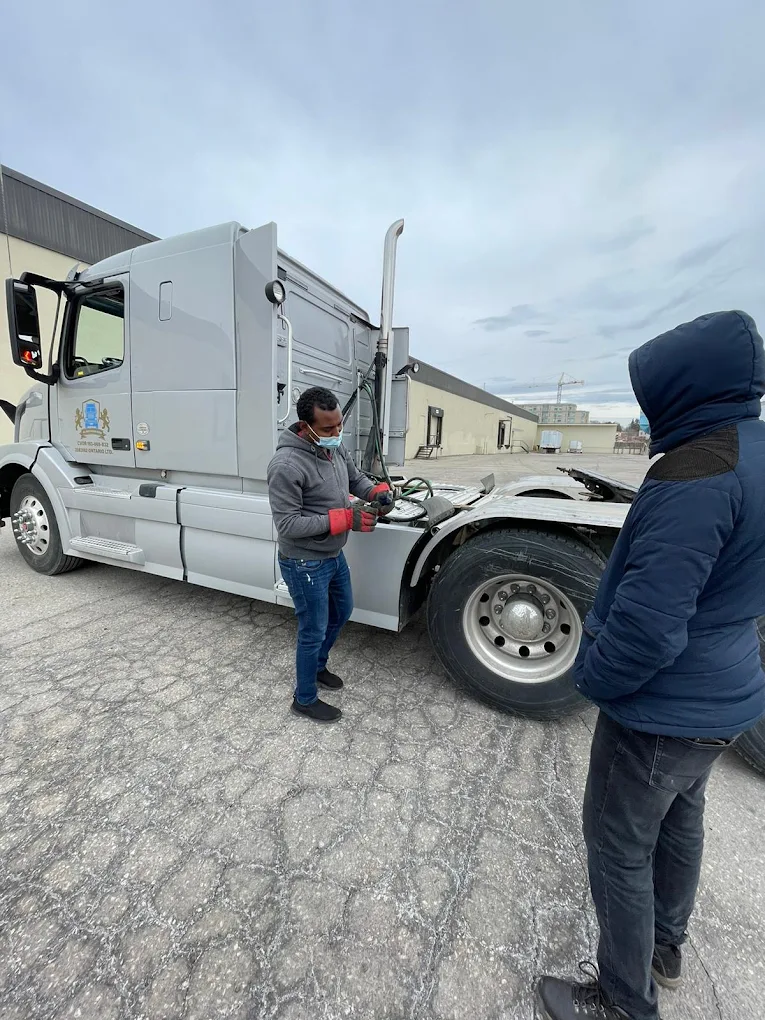
The first day of truck driving school can feel exciting and uncertain at the same time. You may wonder what to bring, whether you will drive immediately, or whether instructors expect you to understand commercial vehicles already.
Most first-day sessions are designed to introduce the program rather than test advanced driving ability. Students commonly begin with orientation, safety expectations, paperwork, course structure, and basic vehicle concepts.
In Brampton, commercial driver training may eventually include experience connected to busy roads, industrial areas, warehouses, and local transportation activity. Peel Truck Driving School helps students become familiar with the learning process before they progress into more advanced training.
Key Takeaways
- The first session usually begins with orientation and course guidance.
- Students are not expected to arrive with commercial driving experience.
- Documents, writing materials, and suitable footwear should be prepared.
- Classroom, yard, and road training are introduced as separate learning stages.
- Safety expectations and instructor guidance begin immediately.
Tip: Arrive early with your documents, notebook, and suitable footwear. Being organized lets you focus on learning instead of avoidable first-day stress.
Preparing Before Starting Truck Driving School
Preparation does not need to be complicated. Begin by checking the instructions sent by your school, confirming the start time, planning your route, and getting enough rest the night before.
Try to arrive slightly earlier than the confirmed time. This gives you time to find the classroom, complete any remaining administrative steps, and settle in without rushing.
You are normally not expected to know how to operate a commercial truck before training begins. Entry-level programs are created to introduce new students to commercial driving step by step.
Ontario Class A applicants must meet provincial requirements that include holding an eligible Ontario licence, passing a vision test, submitting a valid medical report, and completing the required testing and training stages. Your school should clarify which steps must already be completed before your course begins.
What to Bring to Truck Driving School
Your school should provide its own list, but most students need a few basic items for the opening session.
Documents and Enrollment Materials
Bring the identification, licence documents, medical paperwork, or enrollment forms requested by the school. Requirements can differ based on the licence class and your stage in the application process.
Clothing and Suitable Footwear
Wear comfortable clothing that matches the weather. Closed-toe footwear with a stable sole is more appropriate around training vehicles than loose or open footwear.
Classroom Learning Supplies
A notebook and pen are useful for recording terminology, instructor guidance, inspection sequences, and questions. Bringing water can also help you stay focused through classroom instruction.
Do not assume that you need to purchase expensive equipment immediately. Start with the school’s confirmed checklist rather than buying items based on general online lists.
Truck Driving School Orientation and Course Structure
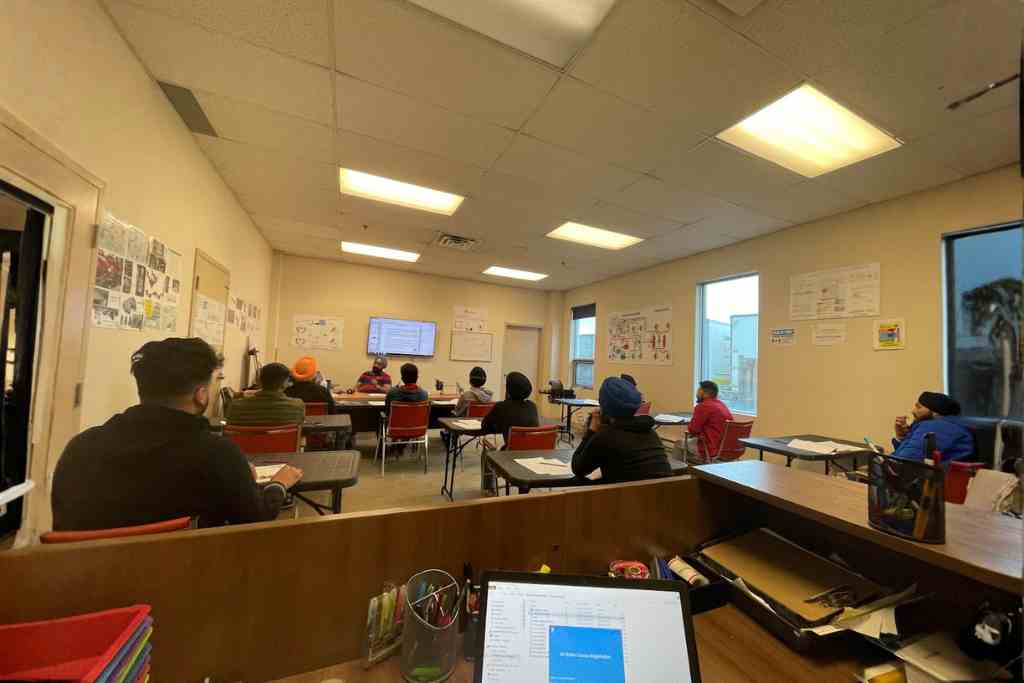
A truck driving school orientation normally explains how the program will work and what instructors expect from students.
Introductions, Attendance, and School Policies
You may meet instructors, administrative staff, and other students. Attendance, punctuality, communication, conduct, and safety policies are often reviewed at this stage.
Classroom, Yard, and On-Road Training Stages
Classroom learning introduces rules, terminology, inspections, and vehicle systems. Yard training allows controlled practice. Road sessions apply those skills in actual traffic once the student is ready.
How Student Progress Is Evaluated
Instructors may explain how attendance, participation, knowledge, safety habits, and practical skills are assessed. Progress usually develops over multiple sessions rather than being judged from one day.
This overview helps make the first day of truck driving school feel organized. Students can see where they are starting and how each training stage supports the next.
The First Truck Driving Class and Safety Foundations
The first truck driving class usually introduces foundational information in simple steps. You should not expect every topic to be covered or mastered immediately.
The lesson may include commercial vehicle terminology, student responsibilities, basic safety procedures, course expectations, and an overview of inspections.
Safety is introduced early because operating a commercial vehicle involves more than steering and shifting. Drivers must understand vehicle condition, space management, communication, documentation, and responsibility for other road users.
During the first day of truck driving school, focus on understanding why each procedure matters. Memorization and smooth performance develop through repetition.
Pre-Trip Inspection and Vehicle Familiarization
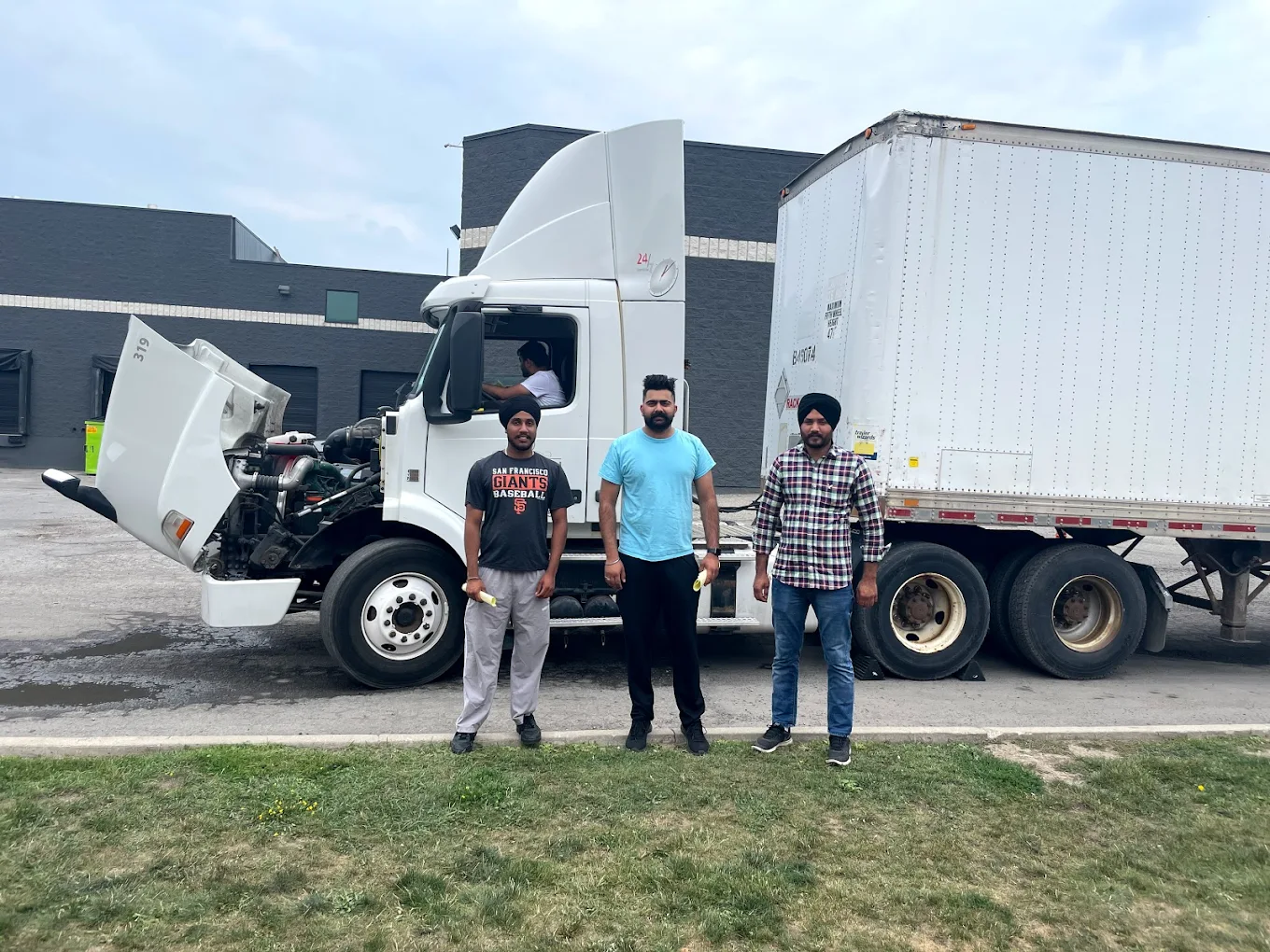
Students may be introduced to the training vehicle and the purpose of a pre-trip inspection early in the program.
The instructor might identify major vehicle areas, explain common inspection points, or demonstrate how a systematic check is completed. Students are generally not expected to memorize and perform the entire process perfectly after one introduction.
Vehicle familiarization may include the cab, controls, mirrors, dashboard indicators, entry and exit procedures, and basic safety points.
This early introduction provides context for later lessons. It also helps students understand that inspections are a regular professional responsibility, not simply a test exercise.
Your internal resource on pre-trip inspection training for trucks can be linked naturally in this section for readers who want a more detailed explanation.
Classroom Learning Versus Practical Training
The balance between classroom and practical work depends on the school, program, group schedule, and licence class.
Some students may spend most of the opening session in orientation and classroom learning. Others may observe a vehicle demonstration, sit in the cab, review controls, or begin a simple supervised yard activity.
You should not assume that you will enter public traffic immediately. Early practical work is normally controlled so students can understand procedures before dealing with complex road conditions.
Observation is also part of learning. Watching an instructor demonstrate safe entry, mirror use, inspection steps, or basic vehicle control can make later hands-on practice easier.
The first day of truck driving school is therefore less about how far you drive and more about whether you understand the training process and safety foundation.
Instructor Guidance and Student Expectations
Instructors generally provide close guidance during early training. They may demonstrate a task, explain its purpose, let the student practise, and then provide corrections.
Beginners commonly struggle with unfamiliar terminology, mirror awareness, vehicle positioning, control sequences, or remembering inspection steps. These difficulties do not automatically mean someone is unsuitable for trucking.
Students are usually expected to:
- Arrive on time and attend consistently
- Listen to safety instructions
- Ask questions when something is unclear
- Accept corrections professionally
- Participate in classroom and practical activities
- Treat vehicles, instructors, and classmates respectfully
You are expected to be willing to learn, not to arrive as an experienced commercial driver.
What Is the First Day of Truck Driving School Like in Brampton?
Brampton is closely connected to Ontario’s transportation and logistics sector. As training progresses, students may encounter busy arterial roads, industrial areas, delivery traffic, warehouse zones, and a mix of passenger and commercial vehicles.
The opening session, however, is usually about creating a foundation. Local road exposure should be added gradually as the student develops control, observation, and decision-making skills.
After the first day of truck driving school, consider whether the program structure was explained clearly, instructors answered questions, safety was treated seriously, and the learning pace seemed manageable.
Do not judge the entire program only by whether you drove a truck immediately. A well-organized introduction can be more valuable than rushing into a difficult exercise without proper preparation.
Conclusion
The first day of truck driving school normally introduces the people, rules, schedule, safety expectations, and learning stages that will guide the rest of the program.
You may complete paperwork, attend orientation, review basic commercial vehicle concepts, observe an inspection, or begin controlled practical activity. The exact schedule varies, but beginners are not expected to know everything before arriving.
Come prepared, listen carefully, ask questions, and focus on one stage at a time. The purpose of day one is to begin building safe habits and a clear understanding of the road ahead.
FAQs
Can I Attend Truck Driving School If I Am Nervous Around Large Vehicles?
Yes. It is common for beginners to feel nervous around commercial vehicles because their size and controls are unfamiliar. Structured instruction and gradual exposure help students become more comfortable.
Should I Study The Ontario Truck Handbook Before My First Class?
Reviewing the handbook can help you recognize basic terms and licensing concepts. You do not need to memorize the entire book before arriving, but early reading can make classroom explanations easier to follow.
Can I Ask For Extra Help If I Do Not Understand The First Lesson?
Yes. Students should ask questions when a procedure or concept is unclear. Addressing confusion early is safer and more useful than pretending to understand and struggling later.
Will I Train With The Same Instructor Throughout The Program?
Instructor arrangements vary by school and schedule. Some students work mainly with one instructor, while others learn from several instructors who cover different classroom or practical components.
Are Breaks Provided During Longer Training Sessions?
Break arrangements depend on the daily schedule and school policy. Orientation should explain the expected timetable so students can plan meals, medication, transportation, and other personal needs.
What Should I Do After My First Training Session?
Review your notes, organize any new materials, and write down questions before the next class. A short review after training helps reinforce unfamiliar terminology and procedures.