Preparing for your road test can feel stressful if you are not sure what examiners focus on. Understanding AZ road test skills in advance helps you practice the right way instead of guessing.
The road test is not about showing off. It is about proving that you can operate a tractor trailer safely, follow procedures, and handle real traffic conditions.
Examiners follow structured commercial vehicle road test standards set by Ontario, so expectations are consistent across DriveTest centers.
When you know what is being evaluated, your confidence improves naturally.
Key Takeaways
The test evaluates inspection, control, and on-road safety skills.
Pre-trip inspection is heavily assessed.
Backing and lane control are closely monitored.
Serious safety violations lead to automatic failure.
Calm, structured driving matters more than speed.
Tip: Practice your full pre-trip inspection aloud and rehearse coupling steps in order to avoid losing easy marks on test day.
Understanding AZ Road Test Requirements and Evaluation Standards
The AZ road test requirements are based on provincial safety guidelines. Every examiner uses the same scoring structure.
The test usually includes three parts:
Pre-trip inspection
Controlled maneuvers
On-road driving in traffic
The truck driving test evaluation focuses on safety first. Examiners are not looking for perfection. They are checking whether you follow safe procedures consistently.
Ontario uses standardized commercial vehicle road test standards. That means the scoring criteria in Brampton are the same as anywhere else in the province.
Understanding this helps remove uncertainty. The test is structured, not random.
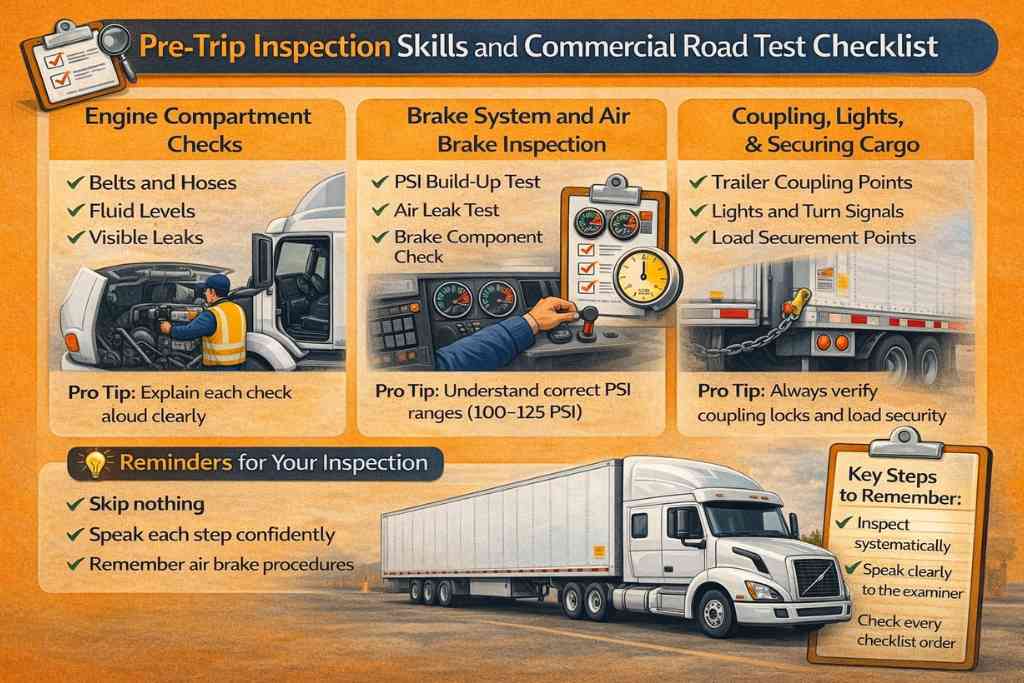
Pre-Trip Inspection Skills and Commercial Road Test Checklist
Pre-trip inspection is one of the most important parts of the exam. Strong pre-trip inspection skills can set the tone for the entire test.
Ontario regulations require commercial vehicle safety inspection before operating heavy trucks. This reduces breakdown risk and improves road safety.
Engine Compartment and Fluid Checks
You must inspect:
Belts and hoses
Fluid levels
Visible leaks
Examiners look for a logical inspection flow.
Brake System and Air Brake Inspection
Air brake system inspection is critical. You may be asked to demonstrate brake checks and explain pressure build-up and warning systems.
Because brake-related failures can be severe, examiners pay close attention here.
Verbal Explanation During Inspection
Many candidates forget to speak clearly during inspection. The commercial road test checklist expects you to describe what you are checking and why.
Sequence matters more than small wording mistakes.
AZ Driving Test Maneuvers and Control Techniques
The test also evaluates AZ driving test maneuvers that show vehicle control and awareness.
Backing and Parking Control
Backing is commonly tested. This may include straight-line backing or controlled parking maneuvers.
Examiners focus on:
Mirror usage
Slow speed control
Awareness of blind spots
Speed is not important. Control is.
Turning Radius and Lane Discipline
Turning radius control is closely observed. Tractor trailers require wider turns. Staying within lanes and managing space is critical.
Lane control and highway merging are also evaluated. Safe space management for large vehicles is a major part of truck driver practical test skills.
On-Road Driving and Truck Driving Test Evaluation Criteria
During on-road driving, the truck driving test evaluation becomes more detailed.
Examiners assess:
Defensive driving for heavy vehicles
Signal use
Hazard response awareness
Railroad crossing procedure for trucks
Only major safety violations result in automatic failure. These include ignoring traffic signals, unsafe lane changes, or failing to perform proper brake checks.
The scoring system is structured. Critical errors carry heavier weight than minor mistakes.
Understanding this helps reduce anxiety. One small correction usually does not end your test.
Common Mistakes That Lead to Test Failure
Most failures are linked to safety-related mistakes.
Common examples include:
Unsafe lane change technique
Not checking mirrors properly
Failing traffic signal compliance
Incorrect brake check procedure
Small steering adjustments or minor gear shifts are usually recorded as deductions, not automatic failures.
Knowing this difference helps you focus on safety instead of overthinking every small movement.
How to Improve AZ Driving Test Preparation Before Test Day
Strong AZ driving test preparation improves confidence and performance.
Practical steps include:
Repeating full pre-trip inspections daily
Practicing backing with clear reference points
Reviewing az road test requirements carefully
Driving mock test routes
Many successful candidates practice mirror scanning technique and safe highway merging habits repeatedly before test day.
If you want structured practice and professional guidance in Brampton, Peel Truck Driving School provides local AZ training program.
What Happens After the AZ Road Test?
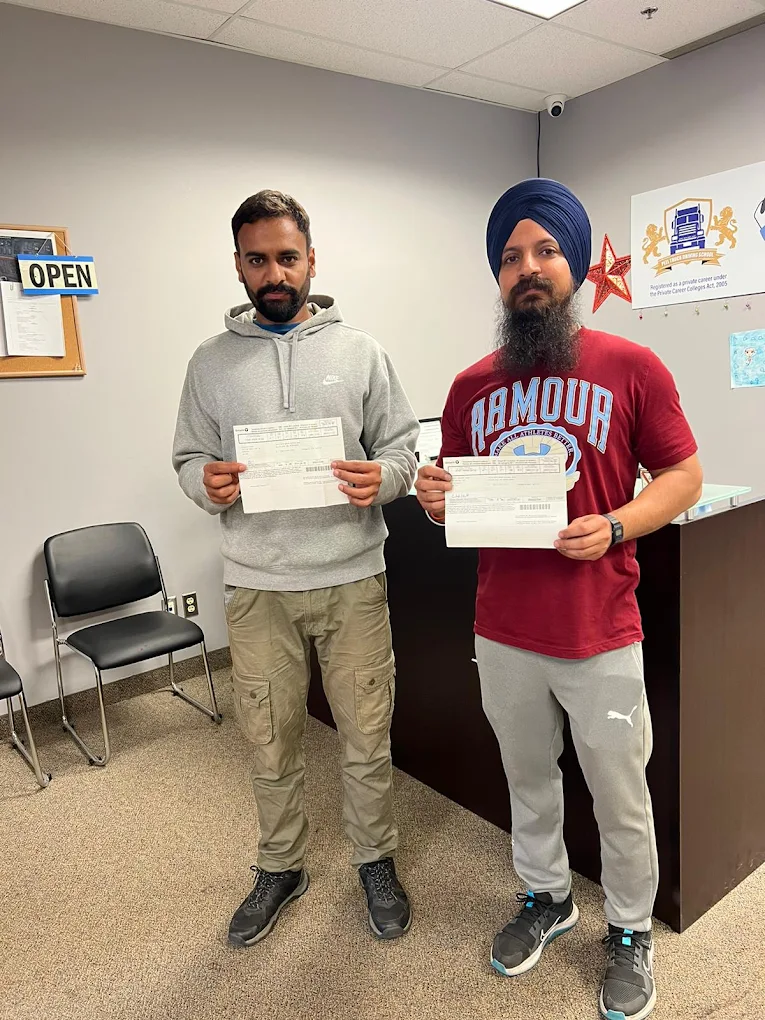
If you pass, your license class is updated in the provincial system.
You will receive a temporary document confirming your new class. The permanent card is mailed shortly after.
Employers can verify your updated class through driver abstract update systems. This ensures commercial driving continuity without delay.
If you do not pass, you can rebook after the required waiting period. Many drivers succeed on a second attempt once they refine weak areas.
Understanding AZ road test skills and evaluation criteria helps reduce surprises on test day.
Conclusion
The AZ road test is structured around safety, inspection accuracy, and controlled driving. When you understand AZ road test skills, preparation becomes more focused and effective.
Practice your inspection sequence, refine your backing technique, and stay calm during traffic situations. Following procedures step-by-step is what examiners want to see.
With proper preparation and confidence, you can approach test day ready and composed.
FAQs
Can I use my own truck for the road test?
In most cases, yes, as long as the vehicle meets testing standards and is properly insured and registered. It must also be mechanically safe and equipped according to provincial requirements.
What documents should I bring on the day of my road test?
You typically need your valid driver’s license, proof of training completion, booking confirmation, and any required medical documentation. Missing paperwork can result in cancellation.
Does weather affect the road test evaluation?
The test usually proceeds in normal weather conditions. Examiners expect safe driving adjustments in rain or light snow, as weather awareness is part of professional truck operation.
How early should I arrive at the DriveTest center?
Arriving at least 30 minutes early is recommended. This gives you time to prepare mentally, organize documents, and avoid last-minute stress.
Can I ask the examiner to repeat instructions during the test?
Yes. If you are unsure about an instruction, you may calmly ask for clarification. Clear communication is better than guessing and making a wrong move.
How many attempts am I allowed if I don’t pass?
There is no fixed maximum number of attempts, but you must wait the required period before retesting. Most drivers improve significantly after reviewing feedback from their first attempt.