Starting your trucking career in Ontario means accepting one big responsibility: safety before movement.
Many new drivers focus heavily on driving maneuvers. But before you even turn the key, inspection matters just as much. Strong habits in pre trip inspection training truck programs prepare you not only for the AZ or DZ test, but for real-world road safety.
In Ontario, examiners often spend significant time evaluating inspection knowledge. A large portion of first-attempt failures happens before the truck even moves, simply because steps were skipped or explained incorrectly.
Understanding inspection is not about memorizing lines. It is about knowing why each check matters.
Key Takeaways
- Inspection is mandatory before AZ and DZ road tests.
- Examiners assess structure, clarity, and sequence.
- Air brake checks are heavily monitored.
- Daily defect reporting protects your license.
- Strong inspection habits improve long-term employability.
Valuable Advice:
Practice your inspection in the same order every time and speak each step clearly out loud so your recall stays consistent under test pressure.
The Role of Pre Trip Inspection Training Truck Programs in Ontario Licensing
In Ontario, inspection is not optional. It is part of licensing standards.
Before booking your AZ or DZ road test, you must demonstrate understanding of the commercial vehicle inspection checklist and vehicle compliance checks. Examiners evaluate your ability to explain what you are checking and why.
Many students assume driving skills matter more. In reality, inspection proves you understand safety responsibility.
Ontario commercial licensing standards require drivers to identify safety defects before operating a vehicle. Without that knowledge, road test approval may be denied.
Understanding the Commercial Vehicle Inspection Checklist and Pre Drive Inspection Routine
A proper pre drive inspection routine follows a logical sequence. Once you understand the flow, it becomes easier.
Inspection usually follows this order:
Engine → Cab → Exterior → Coupling → Brakes
Engine and Under-the-Hood Checks
You check belts, hoses, leaks, oil levels, and secure components. These engine compartment checks ensure nothing is loose or leaking.
Exterior Walk-Around and Tire Inspection
This includes tire and light inspection, checking tread depth, visible damage, and ensuring lights function properly.
Coupling and Trailer Connection Points
You verify the coupling system inspection, fifth wheel lock, air lines, and electrical connections.
Grouping inspection areas helps memory. You are not memorizing random parts. You are following a tractor trailer safety routine.
Air Brake Inspection Steps and Truck Safety Inspection Skills
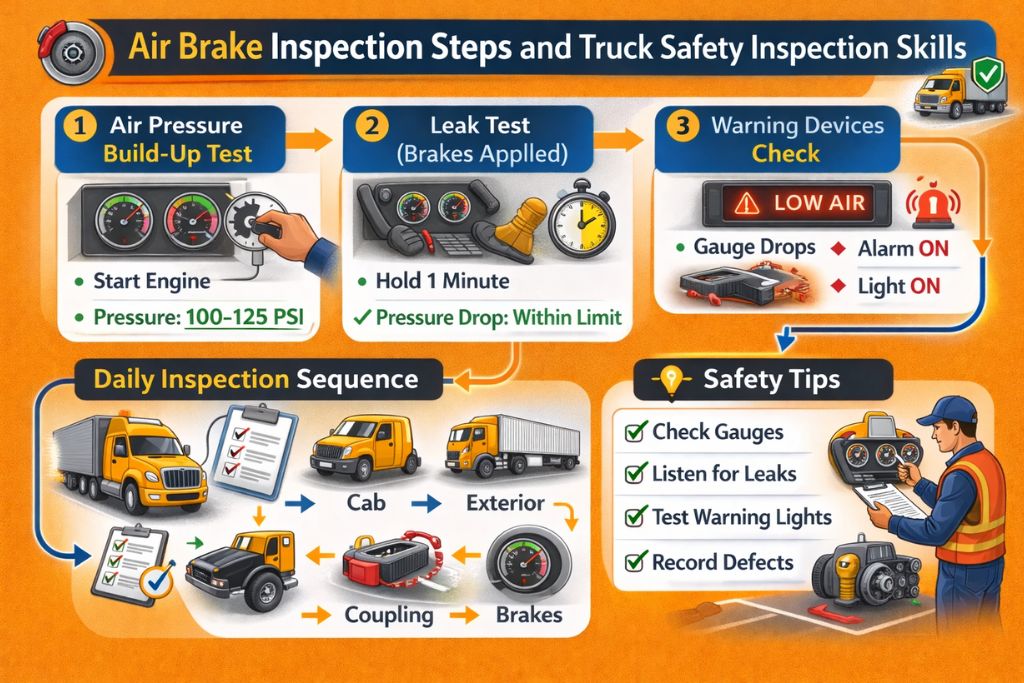
Air brake inspection steps are critical. Heavy vehicles rely on air pressure systems. If pressure fails, braking fails.
Air systems work in sequence: compression → storage → regulation → release.
Air Pressure Build-Up Test
You check that pressure builds within acceptable time limits. This confirms compressor function.
Leak Test and Warning Devices
You perform an air leak detection procedure and confirm warning systems activate at correct pressure levels.
Spring Brake and Emergency Check
Spring brake function ensures automatic braking if pressure drops too low. This is a safety backup system.
Many new drivers think air brakes are too technical. But once broken into steps, truck safety inspection skills become manageable.
Defect Reporting Procedures and Road Safety Preparation
Inspection does not end with observation. It includes documentation.
Defect reporting procedures require drivers to record safety issues in daily inspection logs. This protects both the driver and carrier.
If a defect is found:
- It must be reported.
- Major defects prevent operation.
- Minor defects must still be documented.
Road safety preparation means preventing roadside enforcement checks and avoiding penalties.
Commercial driver compliance depends on accurate vehicle safety documentation.
Common Mistakes New Drivers Make During Vehicle Compliance Checks
Most inspection failures are preventable.
Common issues include:
- Skipping brake system verification
- Forgetting tire tread depth awareness
- Not explaining inspection clearly
- Missing lighting system checks
Minor mistakes may result in deductions. But serious omissions during vehicle compliance checks can lead to automatic failure.
Light data from training feedback shows many first-time failures happen due to incomplete brake checks, not driving errors.
Understanding examiner evaluation criteria helps avoid unnecessary risk.
Building Confidence Through Structured Practice in Brampton
Confidence comes from repetition. Students preparing in Brampton often practice structured inspection routines multiple times before testing. This repetition reduces anxiety and improves recall.
DriveTest Brampton preparation standards require consistency, not speed.
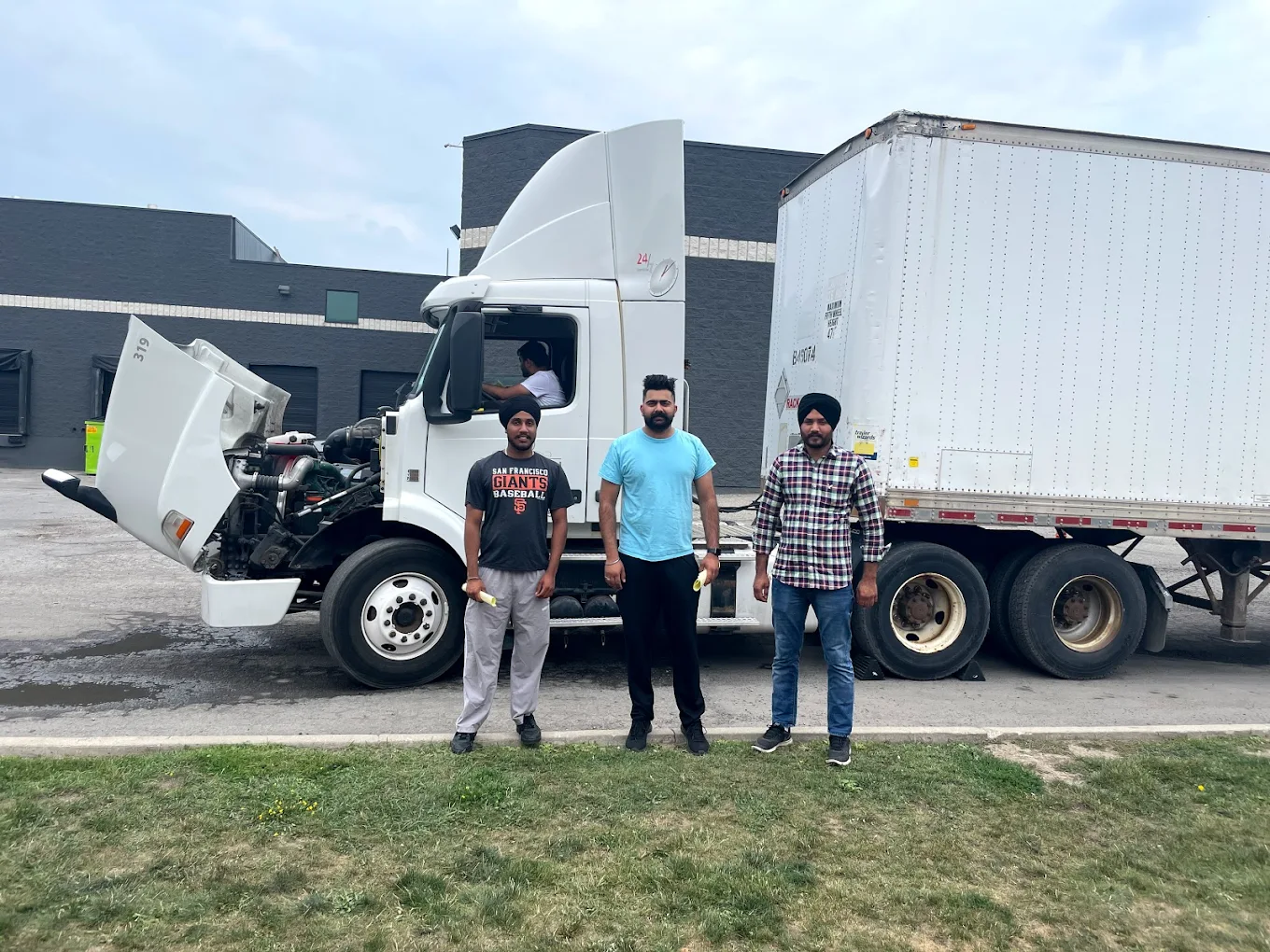
Structured inspection practice inside a tractor trailer training yard builds muscle memory.
The more often you repeat your pre drive inspection routine in the correct order, the less likely you are to freeze on test day.
Why Strong Inspection Habits Protect Your Long-Term Driving Career
Inspection is not just for the road test. Carriers expect daily truck safety inspection skills from drivers. Poor inspection habits can lead to breakdowns, fines, or job loss.
Fleet safety compliance protects both income and license.
Employers often review defect reporting procedures and roadside inspection records during hiring.
Preventive maintenance awareness reduces downtime and protects your commercial driver responsibility.
How to Master Pre Trip Inspection Training Truck Skills Before Your Test?
Mastery comes from structure, not memorization.
Break inspection into sections. Visualize each part. Speak every step aloud.
Use inspection rehearsal techniques like:
- Practicing full walk-through daily
- Timing your sequence
- Explaining each check clearly
Visual learning methods improve recall. When you understand the mechanical flow, confidence-building repetition replaces anxiety.
For students preparing for AZ or DZ licensing in Brampton, structured guidance through programs such as those at Peel Truck Driving School can help build clarity before testing.
You can review program details here:
Conclusion
Strong inspection habits define professional drivers.
From commercial vehicle inspection checklist accuracy to air brake inspection steps, every detail protects safety and career stability.
Learning pre trip inspection training truck skills properly builds compliance, confidence, and long-term opportunity in Ontario’s trucking industry.
Inspection is not just about passing a test. It is about protecting your license, your employer, and everyone on the road.
Frequently Asked Questions
How long should a full truck inspection take during training?
A complete inspection typically takes 20–40 minutes during training, depending on experience. Speed is not the priority. Examiners focus on sequence, clarity, and safety awareness.
Can I use notes or a checklist during my road test inspection?
No. During the official test, you must perform the inspection from memory. That is why repetition and structured practice are essential before test day.
What happens if I find a serious defect during a real job inspection?
You must report it immediately to your carrier or supervisor. Driving with a major safety defect can lead to fines, license penalties, or vehicle out-of-service orders.
Are inspection standards the same across all Ontario DriveTest centres?
Yes. Commercial inspection standards follow provincial guidelines. While routes may vary, inspection expectations remain consistent across testing locations.
Do employers check my inspection knowledge after I’m hired?
Many employers conduct practical evaluations during onboarding. They may ask you to perform a walk-around or explain brake checks before assigning loads.
Will improving inspection skills help me avoid roadside penalties?
Yes. Drivers who follow proper inspection habits are less likely to face compliance violations during roadside enforcement checks. Strong habits reduce risk and downtime.