Finishing truck training feels like a big achievement, but many new drivers quickly realize that passing a test is not the same as driving professionally every day. The transition from truck training to real driving often brings questions about readiness, responsibility, and what real-world driving actually looks like.
This guide is written for new drivers in Brampton who want clarity before starting their first job. It explains what changes after training, what challenges are normal, and how confidence develops with time, not overnight.
Key Takeaways
- Passing truck training is the starting point, not the end of learning.
- Real driving introduces pressure, timing, and responsibility not felt during training.
- Early challenges are normal and shared by most new drivers.
- Confidence develops through routine and repetition, not speed.
- Safety habits and planning matter more once you drive alone.
Tip: “For the first two weeks, pause briefly after each shift to mentally review what went well and what felt difficult. This reflection improves decision-making and confidence over time.”
What Happens After You Finish Truck Training?
After training ends, most drivers enter a short adjustment phase rather than jumping straight into full independence. This usually includes receiving licence confirmation, completing employer paperwork, and learning company-specific procedures.
In Ontario, many new drivers start with supervised routes, local runs, or shorter hauls. These steps exist to reduce pressure and help drivers apply what they learned in training under real conditions.
This phase helps bridge the gap between controlled practice and daily responsibility on the road.
Are New Drivers Really Ready for Real-World Truck Driving?
Many drivers worry they are not fully ready once training ends. This feeling is normal. Training is designed to build safe foundations, not mastery of every situation.
Real driving feels different because traffic is unpredictable, schedules matter, and decisions happen faster. That difference does not mean training failed. It means experience is now doing the teaching.
This stage of the transition from truck training to real driving is where confidence begins to grow through repetition, not perfection.
Common Challenges New Drivers Face on the Road
Most new drivers face similar challenges early on. These include unfamiliar routes, backing into tight docks, managing time windows, and handling traffic stress.
Responsibility increases quickly, but it is not unlimited. Dispatchers, safety teams, and company policies all share part of that responsibility. What matters most is following procedures carefully.
Studies across North American fleets show that early challenges are usually related to judgment and routines, not technical driving ability.
Handling Pressure, Mistakes, and First-Job Expectations
Common Early Mistakes New Drivers Make
Most early mistakes are procedural. Skipping part of an inspection, rushing paperwork, or miscommunicating with dispatch are common examples. These issues are correctable and expected at the beginning.
Accident data consistently shows that serious incidents are more likely when drivers rush, not when they are inexperienced.
Managing Pressure in Traffic and Tight Schedules
Experienced drivers manage pressure by slowing decisions, not speeding them up. Building buffer time, asking questions early, and staying calm in traffic prevents small issues from becoming major ones.
Your first trucking job in Ontario is meant to teach rhythm and responsibility, not push limits.
Finding Work and Meeting Employer Expectations in Brampton
Many drivers worry they will not be hired without experience. In Brampton, this is rarely the case. The region has consistent demand for drivers, and many carriers actively hire newly licensed applicants.
Employers often value safety awareness, communication, and willingness to learn more than past mileage. This is where training background and attitude matter most.
Programs like those at Peel Truck Driving School help prepare drivers for this hiring reality without overselling outcomes.
Why Trip Planning and Inspections Matter More in Real Driving
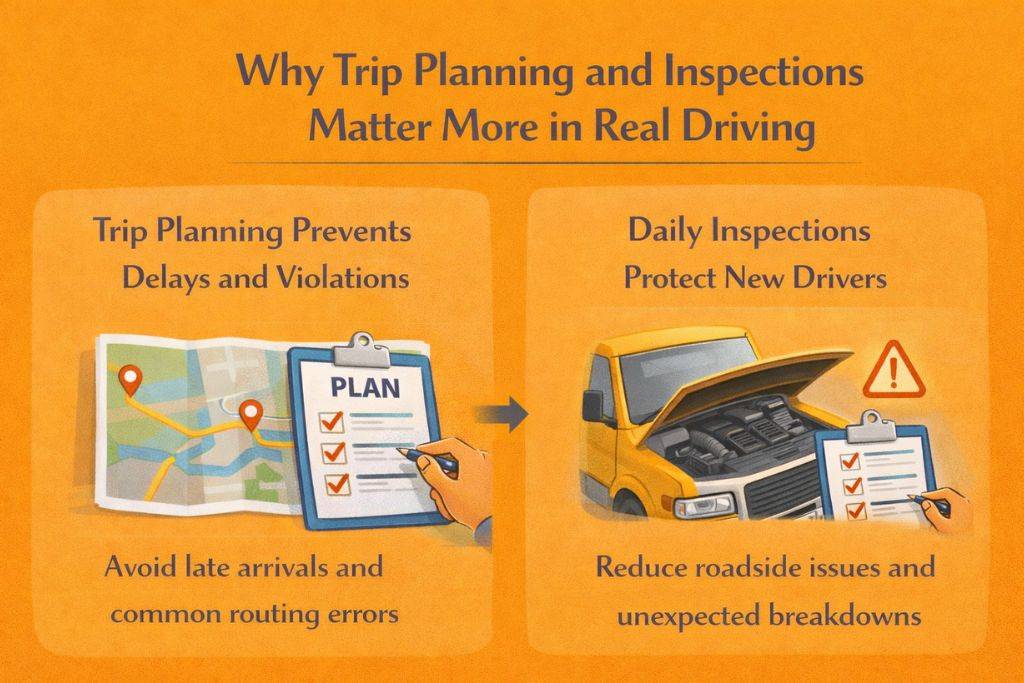
How Trip Planning Prevents Delays and Violations
Trip planning helps drivers avoid late arrivals, missed rest breaks, and routing issues. Simple planning reduces stress and prevents common violations.
Industry data shows that many first-year violations come from timing and routing errors, not unsafe driving.
Daily Inspection Habits That Protect New Drivers
Daily inspections protect drivers from roadside issues and unexpected breakdowns. Consistency matters more than speed. A few extra minutes can prevent hours of delay.
These habits build professional awareness and confidence over time.
Building Confidence During the First Weeks on the Road
Confidence does not arrive all at once. Most drivers begin to feel steadier after repeating similar routes, dealing with familiar situations, and completing uneventful shifts.
The first few weeks should focus on routine, safety, and learning patterns. Speed and efficiency come later.
Confidence grows quietly through consistency.
Avoiding Violations and Understanding Ontario Regulations
Many new drivers worry about unknowingly breaking rules. The most common early violations involve paperwork, inspections, and hours-of-service tracking.
Understanding these rules comes through repetition. As routines settle, stress decreases and driving begins to feel normal rather than overwhelming.
This is often when drivers realize they have fully adapted.
Conclusion
The final stage of the transition from truck training to real driving is not about skill. It is about comfort, consistency, and confidence. With time, routines settle, pressure eases, and professional driving becomes familiar rather than stressful.
Every experienced driver once stood at this same starting point. Progress happens quietly, one safe trip at a time.
Frequently Asked Questions
Should I take additional training or refresher lessons after finishing truck school?
Additional training is not required for most drivers, but some choose short refresher sessions if they feel uncertain about specific skills like backing or trip planning. Confidence usually improves more through real driving experience than classroom repetition.
How long should I stay at my first trucking job before switching companies?
Many new drivers aim to stay at their first job long enough to build stable experience and references. Leaving too quickly can raise questions for future employers, even if the reason is valid.
Is it normal to feel nervous driving alone for the first time?
Yes. Driving without an instructor or trainer is a major mental shift. Nervousness usually fades after a few solo trips as routines and decision-making become familiar.
What documents should I always keep with me as a new truck driver?
Drivers should carry valid licensing documents, medical certification if applicable, logbook access, and company-required paperwork. Missing documents are a common source of early roadside issues.
Do new drivers usually get local routes before long-haul work?
Many companies start new drivers on local or regional routes to build confidence and familiarity before assigning longer hauls. This varies by employer, but gradual exposure is common.
When should I start thinking about long-term career growth in trucking?
Career planning often begins after the first few months on the road, once daily driving feels routine. At that point, drivers can better assess preferences such as local vs long-haul work or specialized equipment.